

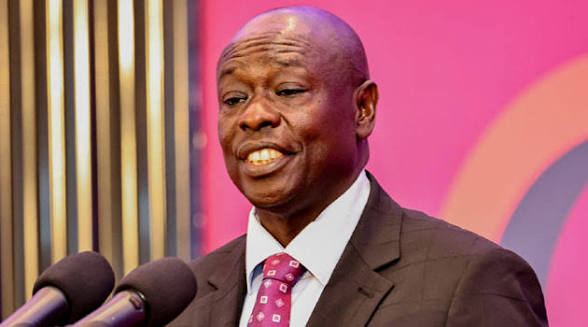
Former DP Rigathi Gachagua…..Photo/CG
By Peter Marango Mwibanda
NAIROBI, Kenya
The judgment by the three-judge bench on the impeachment of former Deputy President Rigathi Gachagua will remain one of the most controversial constitutional decisions in Kenya’s history.
While the court upheld the impeachment process, it simultaneously acknowledged violations of Gachagua’s constitutional rights and awarded him damages.
That apparent contradiction has left many constitutional scholars asking a difficult question: Can a court find that a person’s rights were violated during a process and yet allow the outcome of that process to stand?
The ruling appears to have created a constitutional paradox.
At the heart of the controversy is Article 25 of the Constitution of Kenya, which protects certain rights that cannot be limited under any circumstances.
Among them is the right to a fair trial.
The Constitution treats this right as sacrosanct because it forms the foundation upon which justice is administered.
If a fair hearing is compromised, can the resulting decision be considered constitutionally sound?That question remains unanswered.
The judges appeared to walk a political and constitutional tightrope. On one hand, declaring the impeachment invalid could have plunged the country into an unprecedented constitutional crisis.
Kenya would have faced uncertainty regarding the legitimacy of actions already undertaken following Gachagua’s removal from office.
On the other hand, affirming the impeachment despite findings of rights violations raises concerns about the future application of constitutional safeguards.
The Constitution was designed to protect citizens not when it is convenient but especially when it is inconvenient.
Courts are expected to be the last line of defense against constitutional violations. Their role is not to calculate political consequences but to interpret and enforce the law as written.
Critics argue that the bench may have prioritized political stability over constitutional purity.
Supporters of the decision contend that the judges adopted a pragmatic approach aimed at preserving institutional continuity and preventing national disruption.
Yet constitutionalism demands more than pragmatism. It requires consistency.
The greatest danger arising from the judgment is the precedent it may establish.
If constitutional violations can be acknowledged but their consequences preserved, future governments and legislative bodies may be tempted to treat procedural safeguards as mere technicalities.
Such an approach would gradually erode public confidence in constitutional protections.
History teaches that rights are rarely lost in a single dramatic moment. They are often weakened incrementally through exceptions justified by expediency.
The Gachagua judgment may therefore be remembered less for its immediate political impact and more for the constitutional questions it leaves unresolved.
Importantly, the legal battle is not over.
The ruling does not necessarily mark the end of Gachagua’s legal journey. Kenya’s constitutional framework provides avenues for further appeal and review.
The former Deputy President retains the right to challenge aspects of the judgment before higher judicial forums.
As matters stand, his political future remains uncertain but not extinguished.
Indeed, if he successfully exhausts available legal remedies and secures favorable determinations in subsequent proceedings, the possibility of participating in future electoral contests cannot be dismissed outright.
This reality underscores why constitutional disputes must be resolved with precision rather than political convenience.
Whether one supports or opposes Gachagua politically is ultimately irrelevant.
Constitutional rights do not belong only to popular individuals. They belong equally to political allies, opponents, and ordinary citizens.
The true test of constitutional democracy is not how it treats those we agree with but how it treats those we do not.
Kenya’s Constitution was born out of a painful struggle against arbitrary power.
It was intended to ensure that due process would never be sacrificed on the altar of political expediency.
The enduring question following the impeachment judgment is therefore not whether Rigathi Gachagua won or lost.
The real question is whether the Constitution itself emerged stronger or weaker.
That debate is likely to continue long after the political dust settles. :::
One legal point to note: impeachment of a Deputy President is governed principally by Articles 145 and related constitutional provisions.
Any discussion of future appeals should cite the specific constitutional and statutory provisions actually relied upon in the pending litigation to avoid factual challenges from critics.