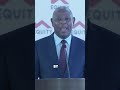


Jimmy Nduruchi,the upcoming Gubernatorial contendor in Bungoma in the next election…….Photo/CG
By Peter Marango Mwibanda
BUNGOMA, Kenya
As Kenya steadily marches toward the 2027 General Election, a political awakening appears to be taking shape across Bungoma County. Long regarded as one of the country’s most politically vibrant regions, Bungoma is once again confronting uncomfortable questions about leadership, development and accountability.
For decades, voters in Bungoma have earned a reputation for rejecting incumbents after a single term, a trend many observers interpret as a reflection of growing public impatience with leaders who fail to deliver meaningful change.
The emerging debate is no longer simply about who should become the next governor.
It is increasingly about whether the county can finally break free from the cycle of poverty, dependency and political patronage that has defined much of its post-devolution history.
This paradox continues to trouble many residents. Since the advent of devolution in 2013, billions of shillings have been allocated to Bungoma County.
Yet for many ordinary families, daily life remains a struggle. Parents grapple with school fees. Farmers cannot afford quality farm inputs.
Access to healthcare remains inconsistent, while youth unemployment continues to rise.
Meanwhile, elected leaders often appear disconnected from the realities facing the people they represent. Critics argue that many politicians emerge during election seasons bearing handouts and promises, only to disappear once power is secured.
The result has been growing frustration among a population increasingly demanding results rather than rhetoric.
Perhaps the strongest symbol of Bungoma’s economic decline lies in the collapse of industries that once sustained thousands of livelihoods.
The struggles of Nzoia Sugar, the decline of Mumias Sugar and the deterioration of once-promising agricultural value chains have left communities economically vulnerable.
To many residents, these failures represent not merely business setbacks but a broader collapse of political stewardship.
At the same time, a new generation of Western Kenya leaders is reshaping the region’s political conversation.
Figures such as Edwin Sifuna, Godfrey Osotsi, Cleophas Malala, George Natembeya and others have energized public discourse by emphasizing governance, accountability and generational transition.
Their rise reflects a broader shift away from traditional ethnic kingpins and toward issue-based politics.
Many supporters view this moment as a revival of the ideals associated with Western Kenya political icons such as Wamalwa Kijana,George Kapten,Masinde Muliro, Martin Shikuku and Elijah Mwangale—leaders remembered for courage, principled politics and advocacy for their communities.
Within Bungoma itself, several names are already generating discussion ahead of 2027.
Former Governor Wycliffe Wangamati retains a base of supporters who point to infrastructure and administrative reforms undertaken during his tenure.
However, legal and political controversies continue to cast a shadow over any potential comeback bid.
Kimilili MP Didmus Barasa is viewed by supporters as energetic, outspoken and politically aggressive.
Yet critics question whether his confrontational style and past controversies make him the unifying figure Bungoma requires at this critical moment.
Westlands MP Tim Wanyonyi brings significant political experience and national visibility.
However, some Bungoma residents question whether years spent in Nairobi politics have weakened his connection to the county’s grassroots realities.
Amid these established figures, a less conventional name is beginning to attract attention: Jim Nduruchi.
While lacking the financial muscle and political networks enjoyed by traditional power brokers, his growing profile is reportedly being driven by grassroots philanthropy, community engagement and a message centered on servant leadership.
For many younger voters, Nduruchi represents a broader desire to dismantle entrenched patronage networks.
His supporters argue that Bungoma’s greatest challenge is not a lack of resources but a lack of leadership focused on economic transformation.
They contend that the county requires a governor capable of prioritizing agriculture, industrial revival, healthcare, youth employment and prudent management of public funds rather than political survival.
Whether Nduruchi ultimately emerges as a serious contender remains uncertain.
Elections are won through organization, resources and alliances as much as ideals. Nevertheless, his growing appeal signals a deeper shift occurring within Bungoma politics.
The central question confronting voters is no longer who can access State House or who enjoys the backing of powerful political patrons.
Instead, many residents are asking a more fundamental question: Who can transform Bungoma’s vast agricultural potential into prosperity for ordinary citizens?
As 2027 approaches, Bungoma stands at a crossroads. One path leads back to familiar political calculations and elite bargains.
The other points toward a new generation of leadership anchored in accountability, economic revival and citizen-centered governance.
The people of Bungoma will ultimately decide which direction to take but one thing is becoming increasingly clear: the era of automatic political loyalty is fading.
A restless electorate is demanding results, and the Mulembe nation may be preparing to write a new chapter in its political history.
Ends.