
MOGADISHU FIRE FIGHT: GUN BATTLES RAGE AS SOMALIA ELECTORAL IMPASSE EXPLODES INTO URBAN WARFARE
MOGADISHU, Somalia
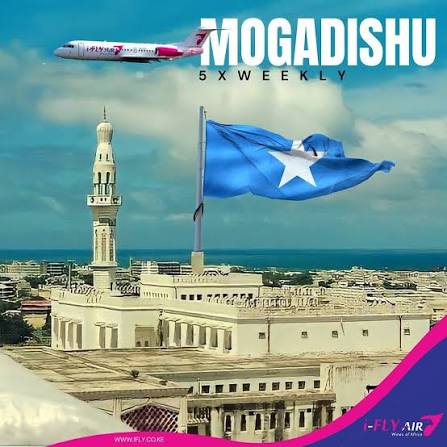
Fierce gun battles and heavy artillery fire shook several districts of Mogadishu as state security forces and clan-backed opposition militias turned the capital into a war zone.
The violence erupted in heavily populated neighborhoods including Howlwadaag, Abdiaziz, Hodan, Warta Nabadda, and Kaaraan, forcing hundreds of terrorized families to flee.
The United Nations High Commissioner for Refugees (UNHCR) confirmed that the initial 48 hours of kinetic clashes killed at least nine civilians and wounded 29 others.
The immediate catalyst for the bloodshed was a highly controversial decision to extend the mandate of President Hassan Sheikh Mohamud, whose official term expired on May 15, 2026.
While the federal government claims the extension is necessary to organize direct national voting, opposition forces have rejected the move as an unconstitutional power grab.
Somalian Defense Minister Ahmed Moalim Fiqi accused opposition leaders of orchestrating a foreign-backed coup. Conversely, opposition leaders, including former Prime Minister Hassan Ali Khaire, accused state forces of using heavy weapons to attack peaceful political gatherings.
The African Union Commission issued an emergency condemnation of the violence, warning that the internal political fracture risks pulling anti-terrorism forces away from frontlines.
State security forces have since claimed that calm has been restored following a large-scale dragnet operation.
However, opposition leaders have rejected the presidency’s authority and vowed to continue their resistance, leaving vital transit junctions—including Dabka Junction and roads leading to the Aden Adde International Airport enclave—guarded by heavy military checkpoints.
BORDER BLOCKADE: REVENUE ROTS IN TRUCKS AS NO-VACCINE EBOLA STRAIN CHOKES EAST AFRICAN TRADE
MPONDWE, Uganda
A compounding economic crisis is ripping through East Africa’s vital transit corridors as border restrictions aimed at containing a rare strain of the Ebola virus have brought cross-border trade to a standstill.
The Bundibugyo Ebola virus strain, which was confirmed in the Democratic Republic of the Congo (DRC) and neighboring Uganda in late May, has caused 381 confirmed cases and at least 62 deaths in the DRC alone, according to the latest Africa Centres for Disease Control and Prevention (Africa CDC) figures.
Because the Bundibugyo strain has no licensed vaccine or approved specific treatment, local authorities have resorted to aggressive border checks and partial closures.
At the vital Mpondwe border crossing, hundreds of cargo trucks are gridlocked in multi-mile lines.
Millions of shillings in agricultural produce and perishable goods are rotting inside trailers, triggering immediate financial ruin for regional transport firms.
The International Organization for Migration (IOM) warned that rigid border blockades risk driving human transit underground, which would rapidly accelerate transmission.
Informal open-air markets, which provide a vital economic lifeline for millions of women and small-scale traders in the region, have been indefinitely suspended, threatening widespread income deprivation.
To stave off a total regional collapse, the WHO and the Africa CDC launched an emergency $518 million continental preparedness and response plan running from June to November 2026.
While health authorities race to implement the “One Response” strategy using spatial modeling and artificial intelligence to catch up to the fast-moving virus, medical institutions are scrambling to fast-track experimental options.
Independent expert panels convened by the World Health Organization (WHO) have advised that the most promising candidate countermeasures include the single-dose rVSV Bundibugyo vaccine by the International AIDS Vaccine Initiative (IAVI) and Oxford University’s ChAdOx1 Bundibugyo vaccine, alongside pharmaceutical interventions like the antiviral drug remdesivir (obeldesivir) and monoclonal antibody therapies MBP134 and Maftivimab.
ECO-VOTE 2026: GHANA CHIEF CANDIDATES LOCK HORNS OVER SOVEREIGN DEBT BAILOUT AND CASH CRUNCH
ACCRA, Ghana — Ghana’s upcoming December presidential campaign has entered a fiery phase as the nation’s two dominant political factions clash over economic survival strategies following a devastating sovereign debt default.
Former President John Mahama of the opposition National Democratic Congress (NDC) is leading an aggressive campaign centered on public outrage over soaring costs of living.
Mahama has heavily criticized the government’s dependency on a $3 billion International Monetary Fund (IMF) lifeline, labeling the accompanying austerity measures as a direct tax on ordinary citizens.
His primary opponent, former Vice President Dr. Mahamudu Bawumia, secured the ruling New Patriotic Party (NPP) flagbearer position after winning the internal party primary with 56.48% of the vote.
Bawumia faces the uphill battle of defending the administration’s fiscal record.
Bawumia’s campaign is pointing heavily to fresh data showing that Ghana’s inflation rate cooled significantly to 3.8%, down from a historic high of 54.1% during the peak of the 2022 cash crunch.
He promises that structural reforms, tax efficiency, and a digitized economy will spark a permanent recovery.
The high-stakes race is unfolding under an atmosphere of intense scrutiny. Civil society organizations have raised red flags over an escalating state crackdown on free speech, alleging that the government is utilizing legislative actions to arrest activists and muzzle journalists under the guise of stopping “false news” ahead of the elections.