

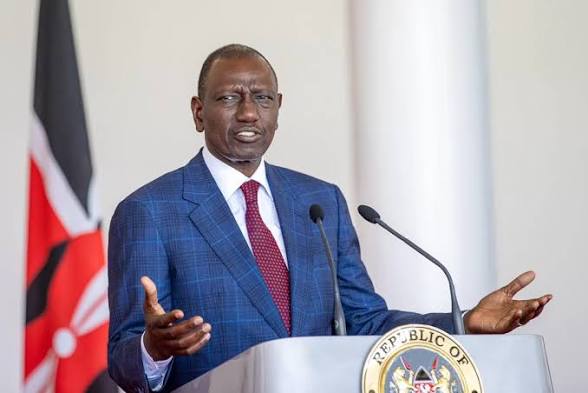
President William Ruto
By Peter Marango Mwibanda | Intellectuals Post
NAIROBI — With the countdown to the 2027 general election quietly but steadily advancing, William Ruto’s political tempo has shifted into overdrive.
What might, on the surface, appear as routine nationwide mobilization increasingly reads as something more deliberate—and more urgent.
The president’s relentless tours across counties are no longer just ceremonial check-ins or development inspections.
They have evolved into a high-frequency political campaign rhythm, signaling a presidency that is actively managing pressure rather than merely consolidating power.
In political terms, frequency often betrays intent—and in this case, it suggests a leader acutely aware of shifting ground beneath his feet.
Publicly, Ruto continues to project command: confident speeches, assertive policy declarations and a steady invocation of his administration’s economic agenda. Yet beneath that composed exterior lies a telling urgency.
The pace of his engagements—church visits, roadside rallies, impromptu addresses—reveals a presidency keen to maintain proximity to the electorate, perhaps out of necessity rather than strategy.
This is not unprecedented. Historically, incumbents approaching reelection cycles tend to intensify grassroots engagement. But the current pattern carries a distinct undertone: reassurance.
Each stop, each handshake, each promise appears calibrated to stabilize a base that is increasingly restless amid economic strain, rising public expectations, and a politically energized opposition.
The Kenyan electorate is not static. It is fluid, responsive, and at times, unforgiving.
The same voter base that propelled Ruto to power on a populist “hustler” narrative now demands tangible delivery—lower cost of living, employment opportunities and credible governance reforms.
Where delivery lags, political capital erodes. And where uncertainty creeps in, anxiety follows.
That anxiety is not necessarily panic—but it is palpable.
The president’s expansive outreach suggests a recognition that incumbency alone is insufficient. Power, as history repeatedly reminds us, is transient—contingent on perception as much as performance.
The urgency in Ruto’s movements points to a deeper political calculus: the need to constantly revalidate his legitimacy in the eyes of the electorate.
Moreover, the evolving political landscape compounds this pressure. Emerging alliances, internal dissent within established coalitions, and the reconfiguration of opposition forces are steadily reshaping the battlefield ahead of 2027. In such an environment, early positioning is not optional—it is essential.
Yet there is risk in overexposure. A presidency seen to be perpetually campaigning risks reinforcing the very perception it seeks to dispel—that of instability or insecurity.
The line between proactive engagement and reactive politics is thin, and crossing it can redefine public perception in unintended ways.
Still, Ruto’s strategy reflects a fundamental political truth: elections are not won in the final year—they are built over time, through sustained visibility and narrative control.
His tours, therefore, may well be less about immediate gains and more about long-term narrative shaping—embedding his presence in the national consciousness as both leader and candidate.
But narrative alone will not suffice.
As the clock ticks toward 2027, the electorate’s patience will increasingly hinge on outcomes rather than optics.
The roads traveled, the speeches delivered, and the promises made must ultimately translate into measurable impact. Otherwise, the very tours designed to reassure may instead amplify skepticism.
In the end, the president’s current pace tells a story more revealing than any speech. It is the story of a leader who understands, perhaps more than ever, that political power is not permanent—it is negotiated daily, earned repeatedly and, if mishandled, swiftly withdrawn.
And as 2027 draws closer, that negotiation is already well underway.