

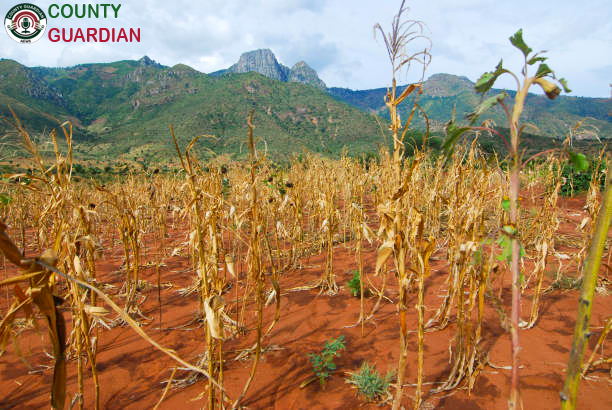
Kenya plans to import 25 million 90-kilogramme bags of maize to cover an expected production shortfall and protect the country from a possible food shortage.
Agriculture Cabinet Secretary Mutahi Kagwe announced the plan as the government responds to drought and unreliable rainfall in several major maize-growing areas.
C.S Kagwe said Kenya has not lost its entire maize crop but expects production to fall short of national demand by about 25 million bags.

Kenya consumes an estimated 70 million to 75 million 90kg bags of maize each year. The projected deficit therefore represents a significant gap between domestic production and consumption.
Why Kenya expects a maize shortage
Drought has affected several important maize-producing areas, reducing the country’s expected harvest.
Kagwe linked the projected shortfall to drought and other climate-related challenges that have affected agricultural production.
Recent reports have also highlighted dry conditions in parts of the country’s main maize-growing belt, including Trans Nzoia and Uasin Gishu.
The government says the planned imports will help bridge the gap between what Kenyan farmers produce and what consumers require.
C.S Kagwe said the government has already started making arrangements for the imports.
The government expects the additional maize supply to help maintain food availability and reduce the risk of sharp price increases caused by a shortage.
Earlier this month, C.S Kagwe also indicated that Kenya could source maize from the COMESA region as drought affected domestic production.
The government has stressed that the import plan aims to manage the projected gap rather than signal that Kenya has completely run out of maize.
What the shortage could mean for consumers
The projected deficit comes at a time when maize remains one of Kenya’s most important staple foods.
Any sustained reduction in supply could put pressure on maize and maize-flour prices if imports fail to arrive in time or cannot fully cover the gap.
The government therefore wants the imports to stabilize supplies and protect consumers from possible price increases.
For households, the key question will be whether the additional supply reaches the market at the right time and at a cost that helps keep maize flour affordable.
The projected shortage also highlights the vulnerability of Kenya’s food production to weather conditions.
C.S Kagwe had previously pointed to irrigation as part of the longer-term response to climate-related production shocks. Reports on his recent remarks have also highlighted the need to strengthen large-scale irrigation and reduce reliance on rainfall.
The immediate imports can help fill the supply gap, but they will not solve the underlying production challenge.
Kenya will still need to improve irrigation, farming inputs and climate resilience if it wants to reduce the need for emergency food imports in future seasons.
Will maize imports push down unga prices?
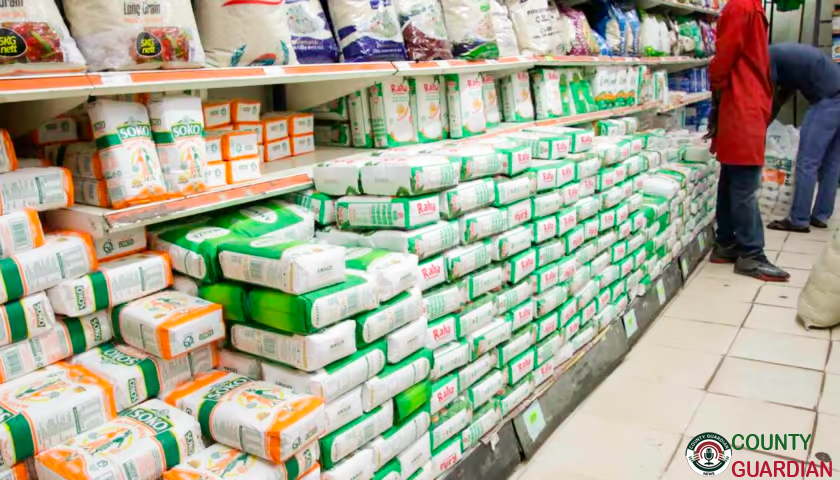
The government’s intervention could help prevent a sharper rise in maize prices if the imported grain reaches the market quickly enough.
However, the final effect on consumers will depend on several factors, including import costs, supply levels and market prices.
For now, the government says the imports will help protect food supplies while Kenya manages the expected production shortfall.
The coming months will show whether the projected deficit remains at about 25 million bags and how quickly imported maize can reach the Kenyan market.
For millions of households that rely on maize as a staple food, the bigger issue is simple: whether the government can keep supplies stable and protect consumers from higher food prices.