Kenya is taking stock of its ongoing health-sector reforms as policymakers, healthcare professionals, county governments and development partners gather in Nairobi for the inaugural Kenya Health Summit 2026.
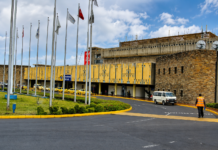
The two-day summit, being held at the Kenyatta International Convention Centre (KICC) on August 18 and 19, is focused on assessing progress in areas including health financing, primary healthcare, digital health, legislation, governance and regulation. The official theme is “Reforms Delivered, Health as a Right.”
The meeting comes as the government points to a series of changes under its wider Universal Health Coverage agenda, including the expansion of the Social Health Authority (SHA), digitization of health services and increased access to specialized medical equipment. But behind the numbers is a more important question for patients:
Are these reforms actually making healthcare easier, more accessible and more reliable when people need it?
What has changed in Kenya’s health system?
The government says significant progress has been made in digitizing healthcare and expanding access to health services.
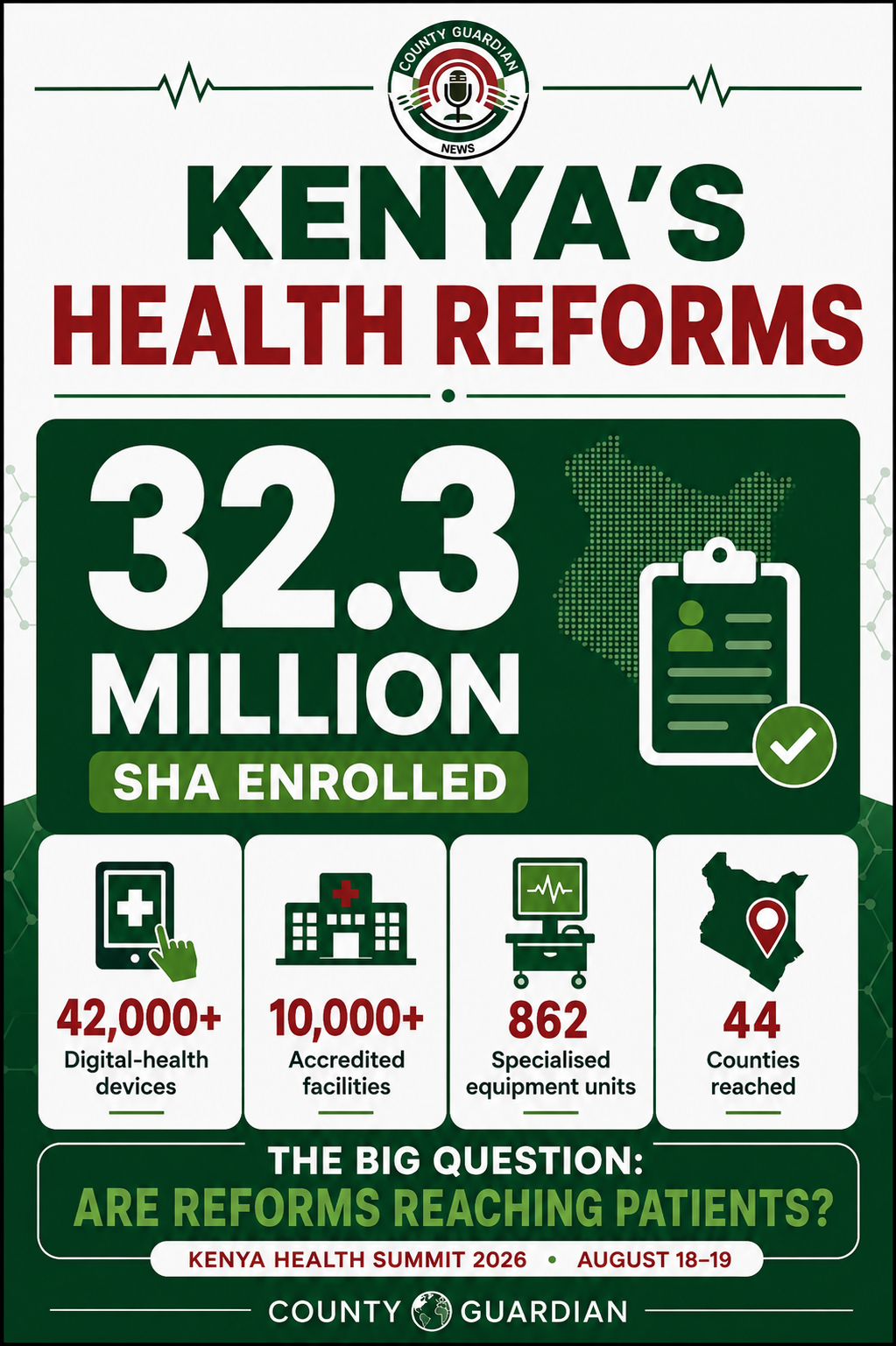
Health Cabinet Secretary Aden Duale said at the summit that more than 32.3 million Kenyans had been onboarded onto SHA, while more than 10,000 health facilities had been accredited to provide services. The government has also been expanding digital systems intended to connect patients, healthcare facilities and the health financing system.
More than 42,000 digital-health devices have reportedly been distributed to support Taifa Care, electronic medical records, biometric verification and real-time processing of SHA claims. The aim is to make health records and financing more integrated while improving the ability to track services and payments.
For patients, however, the technology itself is only useful if it works consistently at the point where healthcare is actually delivered.
The reforms also extend beyond health financing and technology as the government says 862 specialised medical equipment units have been deployed to 251 health facilities across 44 counties under the KSh9.6 billion National Equipment Service Programme. The intention is to expand access to specialized treatment beyond a limited number of major referral facilities.
If the equipment is properly maintained, staffed and accessible to patients, such investment could reduce the need for some patients to travel long distances to obtain specialized care. But equipment alone does not guarantee better healthcare. Its impact also depends on whether facilities have the necessary health workers, medicines, maintenance systems and financing to keep the services operational.
That is where implementation becomes critical.
Why the numbers are only part of the story
The scale of the reforms can be measured in enrolment figures, devices, facilities and equipment. But healthcare is ultimately experienced at the facility level .For a patient, the important questions are often much simpler:
Can I access the service I need?
Will my SHA coverage work when I arrive?
Is the facility equipped and staffed?
Are the medicines available?
Will a claim be processed without unnecessary delays?
Those questions cannot be answered by enrolment numbers alone.
Indeed, Duale has previously urged journalists to look beyond headline figures and examine how reforms are being experienced by patients and healthcare workers.
That makes implementation one of the most important tests facing the reforms.
Why counties matter
Although many of the reforms are being driven nationally, their impact is ultimately felt in health facilities across the counties. The government says specialised equipment has already reached facilities in 44 counties, while the Kenya Health Summit brings together both national and county-level health stakeholders.
The United Nations has also indicated that it is prepared to support Kenya’s health reforms across all 47 counties, working through Kenyan institutions as implementation continues. For county governments, the challenge is therefore not simply adopting national policy. It is ensuring that the reforms translate into functioning facilities, reliable services and better experiences for patients. This is particularly important outside Nairobi and other major urban centers, where access to specialised healthcare can remain a significant challenge.
What remains to be proved?
The government’s reported progress provides an indication of the scale of the reforms, but several questions remain.
Access: Can patients consistently obtain the services they need?
Quality: Are facilities sufficiently staffed and equipped?
Financing: Are health facilities receiving payments efficiently?
Digital systems: Are the new technologies reliable and easy for facilities and patients to use?
Medicines: Can facilities maintain adequate supplies?
County implementation: Are reforms delivering comparable improvements across the country?
The answers will determine whether the reforms become more than impressive statistics.
What happens next?
The Kenya Health Summit continues through August 19, with stakeholders expected to assess progress and identify priorities for the next phase of the country’s health transformation.
For patients, however, the real measure of success will not be what is announced at the summit. It will be what happens inside health facilities. If digitization makes services easier to access, if SHA financing reaches providers efficiently, if specialised equipment remains operational and if county facilities have the staff and resources they need, the reforms could have a tangible effect on healthcare delivery. If those links remain weak, the gap between policy and patient experience will remain.
For now, Kenya’s health reforms are entering another important phase — one in which the focus must increasingly move from what has been introduced to what is actually working for patients.
Editor’s Note
This article is an explainer based on publicly reported information and official statements surrounding the Kenya Health Summit 2026. Figures relating to SHA enrolment, accredited facilities, digital-health devices and specialised equipment are attributed to government officials and have not been independently audited by County Guardian.